Computer Science student Kim Mennemann has successfully defended her master’s thesis, marking a significant step forward in making global biodiversity data more accessible and “computable.”
At the colloquium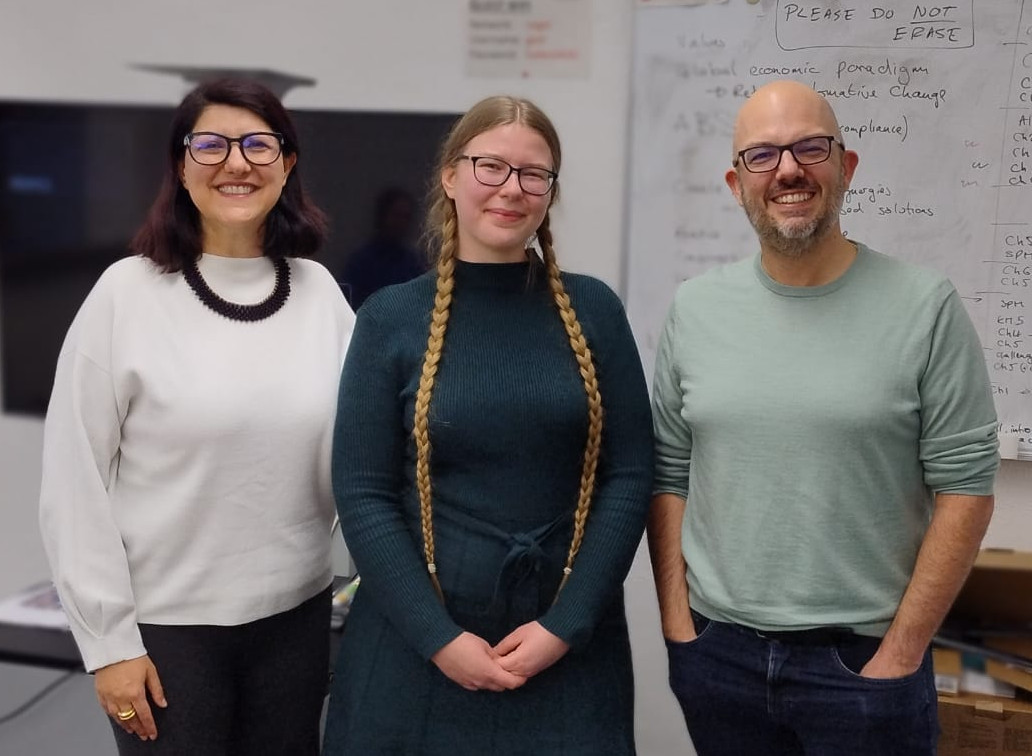
The Challenge: From Narrative to Knowledge Graphs
The IPBES produces critical assessment reports that shape global conservation policy. However, these reports traditionally exist as static text and manual tables, making it difficult for scientists to systematically compare concepts or track how terminology evolves across different documents.
Bridging the Gap with Semantic Technologies
Mennemann’s thesis addresses this by applying Semantic Web technologies to the IPBES framework.
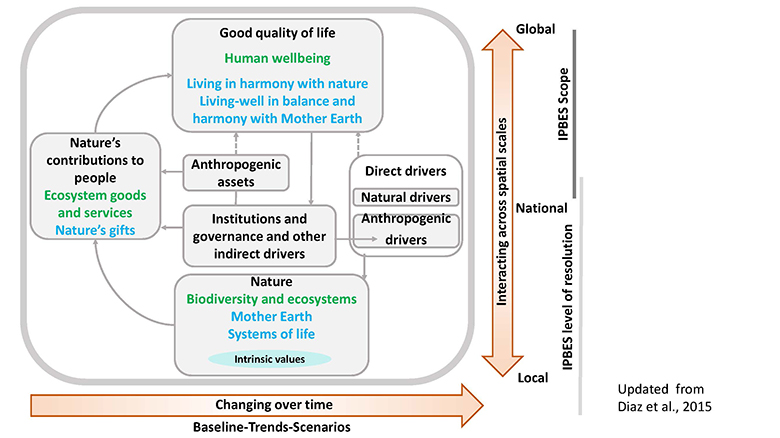
The IPBES Conceptual Framework (Source)
By developing a formal ontology, the research transforms narrative report elements into a machine-readable format.
Key achievements include:
- Digital Framework Modeling: Creating a structural backbone that organizes knowledge across core IPBES fields.
- Glossary Integration: Mapping nearly 1,000 terms across multiple major reports to preserve context and definitions.
- Semantic Enrichment: Linking internal keywords to global external knowledge bases like Wikidata, connecting biodiversity data to the broader “Linked Open Data” ecosystem.
Impact and Future Collaboration
This work directly supports the FAIR principles (Findable, Accessible, Interoperable, and Reusable) and the IPBES Data and Knowledge Management Policy. While previous efforts focused on the structure of reports (chapters and references), this thesis captures the content—the actual concepts and definitions.
We look forward to further collaboration between Mannheim Technical University and Senckenberg, to develop and deploy AI- and knowledge-based systems to support highly relevant biodiversity research.